

Hollywood's rise to become the center of the world-class film industry is the result of a confluence of historical opportunities, economic strength, cultural export, technological innovation, and industrial ecosystem. Its success stems not only from early geographical and commercial advantages but also from the continuous construction of a global "dream-making system." From studio monopolies to the streaming revolution, Hollywood has undergone transformations including sound films, golden stars, film noir, and the science fiction boom. Each collision of technology and culture has reshaped its face, yet it has always shone with the magic of dream-making.
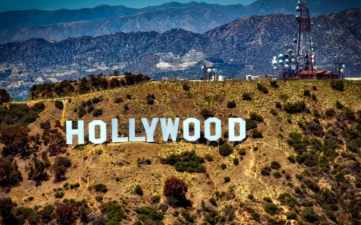
Historical Opportunities: Timing, Location, and Business Acumen
Escaping Monopolies and Patent Wars
In the early 20th century, East Coast film companies (such as Edison's Motion Picture Patents) monopolized technology patents, forcing independent producers to relocate westward to California. Hollywood's dry climate, abundant sunshine (over 300 days of sunshine per year), unrestricted filming seasons, and low land prices made it an ideal location.
World War I Reshapes the Global Landscape
The European film industry stagnated due to World War I (e.g., Pathé's production capacity decreased by 70%), allowing the United States to seize the market gap. By the 1920s, Hollywood controlled 80% of global film distribution.
Industry Ecosystem: From "Factory" to "Universe"—A- "A Super System
Vertical Integration and Assembly Line Production
During the classic Hollywood era (1920s-1950s), the eight major studios (such as Warner Bros. and MGM) achieved complete control over the industry chain: building their own studios, signing stars, and controlling theaters. This industrialized model standardized film production, shortening the production cycle of a single film to a few weeks, with an annual output exceeding 800 films (peak in the 1940s).
Global Distribution Network
In its early days, Hollywood established its distribution dominance by binding overseas theaters with a "revenue-sharing model." Today, the six giants (Disney, Warner Bros., etc.) control more than 50% of global box office revenue sharing and penetrate different cultural markets through localized dubbing and marketing.
Capital and Risk Hedging
Financial instruments such as completion bonds, pre-sale rights, and derivative revenue transform film from "artistic creation" into quantifiable investment financial products. For example, *Avatar*, through multinational capital investment and derivative licensing, ultimately generated over five times its box office revenue.
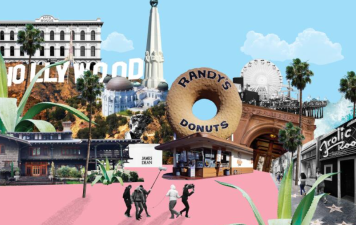
Cultural Hegemony: Narrative Rules and Value Export
The Global Passport of the "Three-Act"
Hollywood's established classic narrative structure (setting up conflict resolution) aligns with common human cognitive traits, and when combined with the "hero's journey" archetype (Joseph Campbell's theory), it creates cross-cultural resonance. The Marvel Cinematic Universe (MCU) achieved over $100 million in box office revenue in 48 countries through modular narratives.
Soft Power and Ideological Encoding
American values (individualism, liberal democracy) are embedded in genre films: Westerns cultivate a "frontier spirit," and superhero films metaphorically represent the "American savior." According to the Soft Power 30 index, film contributes over 40% to American cultural influence.
Devouring and Reconstructing Other Cultures
Through remakes (e.g., Infernal Affairs → *The Departed*) and cultural appropriation (*Kung Fu Panda*), Hollywood absorbs diverse cultural elements while ensuring narrative dominance. This "cultural hybrid" strategy mitigated audience resistance.
Technological Monopoly: From Special Effects to Algorithms – A Moat
The Industrialization of Visual Spectacle
Companies like Industrial Light & Magic (ILM) and Weta Digital monopolize top-tier special effects technology. The Facial Performance Replacement system developed for Avatar improved the precision of actors' micro-expressions to 0.1 millimeters, creating a technological leap.
Data-Driven Creation
In the streaming era, Netflix analyzes script preferences through user behavior data (such as the "three-minute immersion" golden rule), and Amazon Studios even uses AI to predict box office revenue. Traditional studios have also introduced algorithms to optimize casting, editing, and marketing strategies.
Standard Setters
From 35mm film to IMAX and Dolby Atmos, Hollywood has consistently defined viewing technology standards. Mastering standards means controlling global cinema upgrade costs and compatibility barriers.

Talent Attraction: Stardust, Creativity, and the Immigration Dividend
The Star-Driven Mechanism of Idol Creation
Early studios created stars through long-term contracts and gossip marketing (like Marilyn Monroe); modern studios rely on social media to cultivate a "persona." Star salaries can account for 30% of production costs, but can reduce investment risk (e.g., Tom Cruise insured Mission: Impossible 7 to ensure completion).
A Global Talent Harvester
European auteur directors (like Nolan and Villeneuve), Asian action choreographers (like Yuen Woo-ping), and Latin American screenwriters (like Guillermo del Toro) are migrating to Hollywood. The Oscars, the union system, and high salaries constitute a triple attraction.
A "Sweatshop" for the Creative Class
Despite the glamorous facade, Hollywood's lower-level screenwriters and special effects workers face intense exploitation. Data from the Writers Guild of America (WGA) shows that 49% of screenwriters earn less than $40,000 annually; this low-cost workforce supports content production capacity.